
A California divorce is initiated and completed through a series of court forms, each serving a specific purpose within the legal process. Filing a single document does not begin or complete a divorce. The court requires a collection of forms that identify the parties, establish the issues to be decided, provide financial disclosures, document service of process, and ultimately support the entry of a final Judgment of Dissolution.
The forms required in one divorce may differ from those required in another. Cases involving minor children require additional custody and child support documents. Divorces involving substantial assets, spousal support, or negotiated settlements often require additional declarations and supporting paperwork before the court can finalize the case. Superior Court Docs prepares divorce documents for self-represented individuals throughout Los Angeles County based on the information provided by each client. As a registered California Legal Document Assistant, we prepare legal documents but do not provide legal advice or legal representation.

Every divorce document filed with the court serves a distinct legal purpose. The Petition begins the case, the Summons provides formal notice to the other spouse, financial disclosure documents establish each party’s financial circumstances, and judgment documents present the terms that will become part of the final court order. No single form replaces another, and each document becomes part of the complete court file.
The forms required also depend on the circumstances of the marriage. Cases involving children require additional custody, visitation, and child support documents. Divorces involving property division, spousal support, or negotiated agreements frequently require additional declarations or supporting paperwork before the court can enter judgment.
Preparing a complete set of documents from the outset helps reduce delays caused by missing paperwork or incomplete filings. Since California divorce cases are document-driven, accuracy and consistency across every form are essential throughout the process.
California Judicial Council forms are used throughout Los Angeles County divorce proceedings. While the specific forms required vary from case to case,
the following categories make up the foundation of most divorce filings.
The Petition for Dissolution of Marriage is the document that formally asks the court to end the marriage. It identifies the spouses, establishes the basic facts of the marriage, and outlines the issues that will need to be resolved before the divorce can be finalized. Those issues may include property division, spousal support, attorney’s fees, reimbursement claims, and child-related matters when applicable.
Filing the Petition does not dissolve the marriage. Instead, it opens the case and establishes the legal framework for every document that follows. Information provided in the Petition should remain consistent with the remaining court filings throughout the divorce process.
The Summons accompanies the Petition and serves as the official notice that a divorce action has been filed. It informs the responding spouse that legal proceedings have begun and explains important rights, responsibilities, and deadlines established under California law.
The Summons also includes automatic temporary restraining orders that take effect upon service. These orders generally restrict both spouses from transferring certain property, changing insurance coverage, or taking other actions that could affect the marital estate while the divorce remains pending.
California requires both spouses to exchange financial disclosure documents during nearly every divorce proceeding. These documents provide information regarding income, expenses, assets, debts, retirement accounts, investments, real property, and other financial interests that may affect property division or support.
Financial disclosures are intended to promote transparency throughout the divorce process. Complete and accurate disclosures allow both parties to evaluate settlement proposals using the same financial information and provide the court with the documentation necessary to review the case when required. Incomplete or inaccurate disclosures frequently result in additional requests for information and may delay resolution of the divorce.
Declarations provide the court with factual information supporting a request made during the divorce. Unlike the Petition, which identifies the issues in the case, declarations explain the circumstances surrounding those issues and provide additional details the court may need when reviewing requests involving custody, support, property, or other disputed matters.
The information contained in a declaration should be accurate, complete, and consistent with the remaining court documents filed in the case. Since declarations often accompany motions or Requests for Order, they become an important part of the court record and may be considered during hearings.
A Request for Order is used when one party asks the court to issue or modify orders before the divorce is finalized. These requests commonly involve child custody, parenting time, child support, spousal support, attorney’s fees, or other matters requiring a judge’s decision while the case remains pending.
A Request for Order generally includes supporting declarations and additional documents explaining the relief being requested. Since each request is based on the circumstances of the individual case, the supporting paperwork may differ depending on the issues presented to the court.
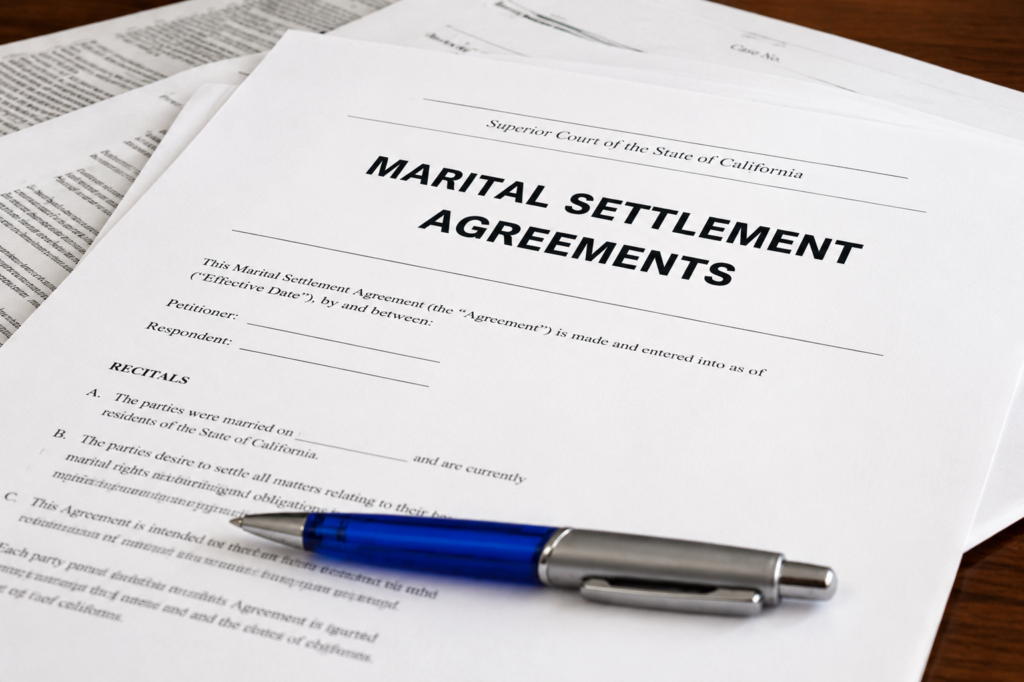
A Marital Settlement Agreement is a written agreement that documents the terms both spouses have accepted for resolving their divorce. Depending on the circumstances, the agreement may address property division, debts, spousal support, child custody, parenting schedules, child support, and other issues requiring resolution before the divorce can be finalized.
Once properly prepared and signed, a Marital Settlement Agreement may be incorporated into the final judgment submitted to the court. Reaching a complete written agreement often reduces the need for additional hearings and allows uncontested divorces to proceed more efficiently toward final resolution.
Judgment documents present the final terms of the divorce for the court’s approval. These documents summarize the orders that will govern the parties after the marriage has been dissolved and often incorporate settlement agreements, support orders, custody arrangements, and property division reached during the case.
Submitting the initial divorce paperwork does not complete the divorce. Final judgment documents must also be prepared before the court can enter a Judgment of Dissolution and legally terminate the marriage after California’s mandatory waiting period has been satisfied.
Every California divorce begins with many of the same foundational documents, but the complete set of required paperwork depends on whether the spouses have minor children together. Child-related issues introduce additional legal requirements that must be addressed before the court can finalize the divorce.
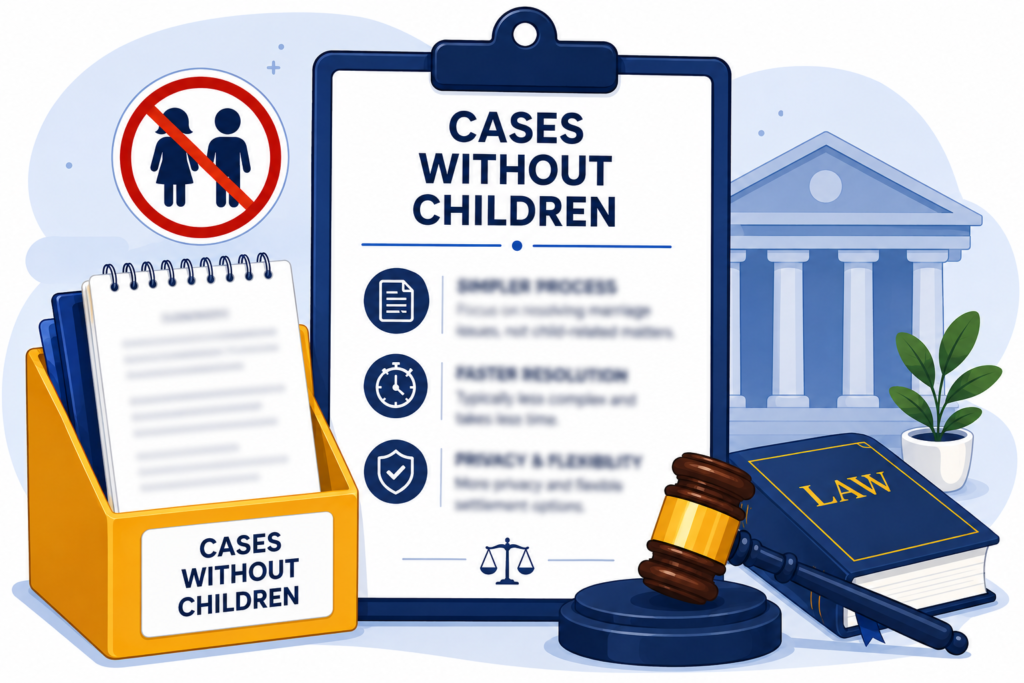
Divorces that do not involve minor children generally focus on the legal and financial issues surrounding the end of the marriage. The required paperwork typically addresses property division, debts, spousal support when applicable, financial disclosures, and the documents necessary for entry of judgment.
Although these cases often require fewer forms than divorces involving children, the court still expects complete and accurate paperwork throughout every stage of the proceeding.
Divorces involving minor children require additional forms addressing legal custody, physical custody, parenting schedules, child support, and other matters affecting the children’s care and well-being. These documents provide the court with the information needed to review proposed parenting arrangements and enter appropriate orders before the divorce is finalized.
The specific forms required depend on the circumstances of each family. Parents may need to prepare additional declarations, parenting plans, Requests for Order, or other supporting documents as their case progresses through the court system.

Every divorce document filed with the court serves a distinct legal purpose. The Petition begins the case, the Summons provides formal notice to the other spouse, financial disclosure documents establish each party’s financial circumstances, and judgment documents present the terms that will become part of the final court order. No single form replaces another, and each document becomes part of the complete court file.
The forms required also depend on the circumstances of the marriage. Cases involving children require additional custody, visitation, and child support documents. Divorces involving property division, spousal support, or negotiated agreements frequently require additional declarations or supporting paperwork before the court can enter judgment.
Preparing a complete set of documents from the outset helps reduce delays caused by missing paperwork or incomplete filings. Since California divorce cases are document-driven, accuracy and consistency across every form are essential throughout the process.
There is no single checklist that applies to every California divorce. The forms required for one case may not be appropriate for another because the court paperwork is determined by the issues involved rather than by the divorce itself.
Property ownership, retirement accounts, spousal support, business interests, minor children, existing court orders, negotiated settlements, and disputed issues can all affect the documents that must be prepared. Additional forms may also become necessary as the case progresses or if new requests are presented to the court after the initial filing.
Attempting to prepare forms without considering the specific circumstances of the case often results in incomplete document packages or unnecessary filings. Reviewing the issues involved before documents are prepared helps identify the categories of paperwork required so the case begins with a complete and organized filing rather than relying on a generic list of divorce forms.
Preparing divorce paperwork involves more than completing individual forms. The documents filed with the court must be accurate, internally consistent, and appropriate for the issues involved in the case. Errors in the paperwork frequently lead to rejected filings, requests for corrections, or delays that extend the overall divorce process.
California Judicial Council forms are updated periodically to reflect changes in court rules and legal requirements. Using outdated forms may result in rejected filings or require documents to be prepared again using the current versions accepted by the court.
Confirming that the most recent forms are being used before preparing a divorce package helps reduce avoidable delays and ensures the paperwork complies with current filing requirements.
Every divorce form relies on accurate information provided throughout the document package. Missing addresses, incomplete financial information, omitted property, or unanswered sections can prevent the court from processing the paperwork as submitted.
Reviewing each document carefully before filing helps identify missing information while ensuring the forms remain consistent from beginning to end.
Certain divorce forms require additional documents before the court can fully review a request. Financial disclosures, declarations, Proof of Service, settlement agreements, and other supporting paperwork may all be required depending on the circumstances of the case.
Submitting a form without the documents that support it often results in additional filings or requests for corrections before the case can continue.
California provides different forms for different stages of the divorce process. Documents appropriate for one request may not apply to another, and forms used in cases involving children may differ from those used in divorces without children.
Preparing the correct forms for the specific issues involved helps avoid unnecessary delays caused by filing documents that do not apply to the case.
Information provided throughout a divorce case should remain consistent across every document filed with the court. Differences in dates, property descriptions, financial information, or requested relief can create confusion and require corrections before the court can proceed.
Reviewing the complete document package rather than each form individually helps identify inconsistencies before the paperwork is submitted.
Preparing divorce forms requires more than completing individual documents. Information must remain consistent throughout the entire document package, supporting paperwork must be included when required, and every filing should correspond with the specific issues involved in the case. Superior Court Docs prepares divorce forms for self-represented individuals based on the information they provide while helping ensure the completed paperwork is organized and ready for filing.
Our process begins with detailed questionnaires designed to gather the information required for your case. After reviewing the completed information, we prepare the appropriate divorce forms, organize the supporting documents, review the paperwork for consistency, and provide filing instructions so you understand the next steps after your documents have been completed.
Superior Court Docs is a registered California Legal Document Assistant. We prepare legal documents for self-represented individuals but do not provide legal advice, recommend legal strategies, or represent clients in court. Our role is to help clients prepare organized divorce paperwork while remaining within the responsibilities established for California Legal Document Assistants.
The forms required for a California divorce depend on the issues involved in the case, including children, property division, support, existing court orders, and any requests made during the proceedings. Reviewing the circumstances of the case before preparing documents helps determine which forms are appropriate.
Most divorce cases throughout California use the same statewide Judicial Council forms. Local courts may require additional local forms or follow different filing procedures, so it’s important to confirm the requirements that apply to the county where your case is filed.
The initial divorce filing generally begins with the Petition, Summons, and any additional documents required for the specific circumstances of the case. Additional forms are prepared as the divorce progresses and new filings become necessary.
Yes. California Judicial Council forms are revised periodically to reflect updates in court rules and legal requirements. Using the current version of each required form helps avoid delays caused by outdated paperwork.
Filing the wrong form may result in rejected paperwork, requests for corrections, or additional filings before the case can move forward. Identifying the appropriate forms before preparing the document package helps reduce unnecessary delays.
In many situations, documents may be amended or corrected after filing if errors are identified. The process depends on the type of document involved and the stage of the case, which is why preparing accurate paperwork from the beginning is always preferable.
Yes. Divorces involving minor children generally require additional documents addressing custody, parenting time, child support, and related family law issues before the court can enter a final judgment.
If your spouse has already filed, you may need to prepare response documents instead of initiating a new divorce case. The paperwork required depends on the status of the existing case and the issues that remain before the court.
No. The forms required for your divorce depend on the circumstances of your marriage, the issues involved, and the stage of the case. Few divorces require every category of document described in this guide.
Not always. Additional forms are often required as the divorce progresses, particularly if new issues arise, agreements are reached, or requests are submitted to the court. The paperwork filed at the beginning of a divorce is rarely the only documentation required before the case is finalized.
Preparing the correct divorce forms is one of the most important parts of a California divorce. Every document filed with the court becomes part of the official case record, making accuracy, consistency, and organization essential throughout the process.
If you’re preparing for divorce and need assistance with Los Angeles County divorce forms, Superior Court Docs is here to help. Contact our team today to learn more about our divorce document preparation services and begin preparing the paperwork required for your California divorce.